
Friday, March 28, 2014
Planning the rest of the planting season
On Tuesday, we started some seeds inside. Thursday, we sorted the rest of the seeds based on when they need to be planted.

Tuesday, March 25, 2014
Starting seeds in flats
Today we started seeds in flats. They'll grow inside until they're strong enough and it's warm enough for them to be transplanted outside.


We'll also try to grow ginger in a pot. It will also stay indoors until it gets bigger.

Thursday, March 13, 2014
Happy St. Patrick's Day
We potted shamrocks for St. Patrick's Day.

The holiday originated in Ireland. Shamrocks grow there, too. St. Patrick wanted to let people know that God can be 3 in 1, and when you look at a shamrock you can see that it has three leaves but is still one plant. He used this idea to explain God many years ago to new Christians in Ireland. Nowadays, people think shamrocks bring you luck. Rakeem says they protect you from leprechauns.
How to pot a shamrock:
Step 1: Dig up some shamrocks and untangle them from each other. Look out for the eggs of white flies. If you see one, rub it off and dip the leaves in water.
Step 2: Put newspaper in pots with holes in the bottom so the dirt doesn't come out the bottom. We need holes so some of the water can come out. If there's too much water the plant may drown.
Step 3: Put some dirt in the pots, but not too much.
Step 4: Then you put the plant i n the pot, and then you fill up the rest of the pot with soil. Pat down the dirt, but not too much.
Step 5: Put something under the put such as a plate to catch the water.
Step 6: Water the plant until water comes out the bottom, and wait to water it again until the soil on top is dry.

Ms. Lucy explains the plan.

Shamrocks have really interesting roots.

Rakeem fills pots with soil.

Terrence shows off his shamrock.

Marquis with his shamrock.
Tuesday, March 11, 2014
Moving the chickens to their new home
We took advantage of the warm weather and moved the chickens to their new home this afternoon. It's been a long time coming, but now the chickens have lots more room to roam!


Alzario gets the new nest boxes ready by filling them with straw.
Milaun brings Mr. Farmer.
Mr. Dwyer brings Aretha and Coretta.
Lorne walks across the ice with either Tulip or Daisy (it's hard to tell who he's got)
Jamari grabs Coco.
Ms. Lucy carries Whitney.
The flock gets used to their new digs.
Thursday, February 27, 2014
Two great questions
We were going to plan out our planting calendar today, but two students asked excellent questions, and we spent the day talking about them.
1. How do seeds get into packets?
Seeds get into their packets when a farmer somewhere grows what you're looking for. Then he or she has to wait for those plants to produce seeds. Then he puts those seeds into packets and sells them.
For example, sunflowers. When you plant a sunflower seed, it grows into a sunflower. Then that sunflower produces seeds. Then, you have to collect those seeds. And then you can sell those seeds or replant them and start the cycle all over again.
2. If you plant seeds you saved, will you get more seeds?
The simple answer is yes because the seeds from that plant will regrow if you care for them correctly.
The real answer is more complicated because of hybrids. A hybrid plant is a cross between two very different varieties of the same crop. If you plant the seeds you collect from a hybrid plant, you might get new plants, but you don't know what kind of plant you're going to get.
If you save the seeds from a non-hybrid plant, you can save them and plant them again. We do this in our garden with beans and other crops.
1. How do seeds get into packets?
Seeds get into their packets when a farmer somewhere grows what you're looking for. Then he or she has to wait for those plants to produce seeds. Then he puts those seeds into packets and sells them.
For example, sunflowers. When you plant a sunflower seed, it grows into a sunflower. Then that sunflower produces seeds. Then, you have to collect those seeds. And then you can sell those seeds or replant them and start the cycle all over again.
2. If you plant seeds you saved, will you get more seeds?
The simple answer is yes because the seeds from that plant will regrow if you care for them correctly.
The real answer is more complicated because of hybrids. A hybrid plant is a cross between two very different varieties of the same crop. If you plant the seeds you collect from a hybrid plant, you might get new plants, but you don't know what kind of plant you're going to get.
If you save the seeds from a non-hybrid plant, you can save them and plant them again. We do this in our garden with beans and other crops.
Tuesday, February 25, 2014
Tuesday, February 18, 2014
Preparing to market rose hip tea
Agriculture Task Force is preparing to sell our rose hip harvest. As always, we will use the money we make to buy more supplies for our agriculture program.
Our idea is to make rose hip tea and give out free samples at the CJA African American Heritage Celebration on Thursday evening, February 20th. Then we'll sell the rose hips and explain to people how to make this tasty and healthy beverage.

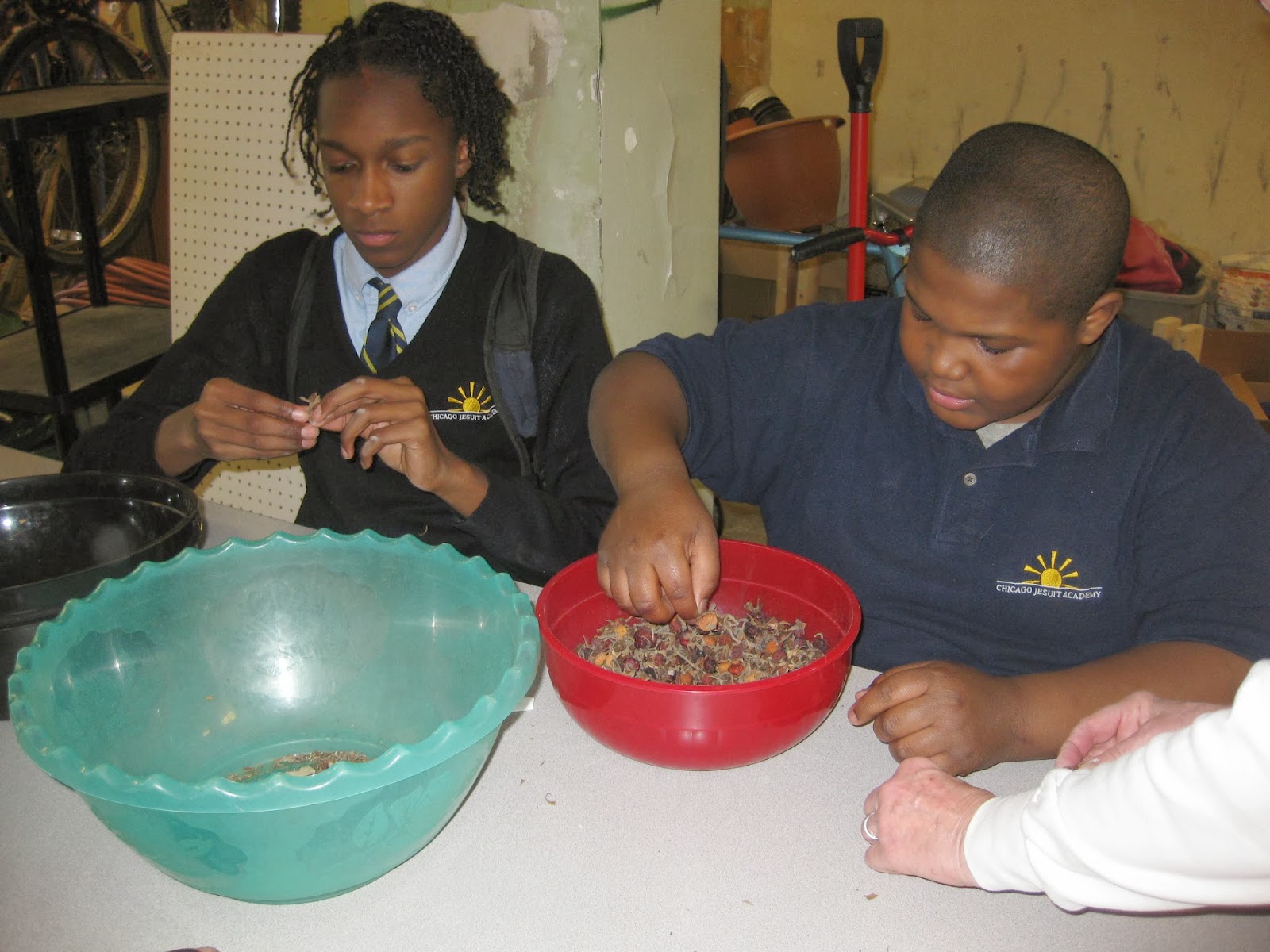
Our idea is to make rose hip tea and give out free samples at the CJA African American Heritage Celebration on Thursday evening, February 20th. Then we'll sell the rose hips and explain to people how to make this tasty and healthy beverage.
Javion and Lorne (grade 6) write out preparation instructions that will come with every purchase of rose hips. Here's what they wrote:
Rose Hip Tea
1. Put 6 rose hips in 6 cups of water.
2. Boil for 5 minutes.
3. Pour in a mug.
4. Wait for tea to cool.
5. Add honey or sugar
6. Enjoy!
You can re-use rose hips up to three times.
Alzario (grade 8), Milaun (grade 6), and Ms. Lucy separate the stems and petals from dried rose hips, and select the best ones to sell.
Subscribe to:
Posts (Atom)